Secure Digital Platforms, Real-Time Information Sharing, and Intelligent Analytics Are Transforming Modern Healthcare
Healthcare organizations are increasingly adopting cloud computing technologies to improve data management, strengthen clinical collaboration, and expand access to healthcare services. As the volume of medical information continues growing through electronic health records, medical imaging, wearable devices, laboratory systems, and telehealth platforms, cloud-based solutions are enabling healthcare providers to store, access, and analyze information more efficiently while supporting coordinated patient care.
Traditional healthcare information systems often relied on isolated databases and on-premise infrastructure, making it difficult for healthcare professionals to access patient information across multiple facilities. Modern cloud computing platforms provide secure and scalable environments where clinicians, researchers, administrators, and healthcare partners can collaborate using real-time information while maintaining high standards of data protection.
Hospitals, healthcare systems, research institutions, medical technology companies, pharmaceutical organizations, and digital health providers are investing in cloud technologies to improve operational efficiency, accelerate innovation, and support more connected healthcare ecosystems. Industry experts believe cloud computing will continue playing a central role in healthcare digital transformation as organizations seek greater flexibility, interoperability, and data-driven decision-making.
Cloud-Based Electronic Health Records Improve Information Access
Cloud technology enables healthcare providers to access patient information securely from multiple locations.
Cloud-based records include:
- Medical history
- Laboratory results
- Diagnostic imaging
- Medication information
- Treatment plans
Instant access to comprehensive patient information improves care coordination while reducing administrative complexity. Connected records strengthen healthcare delivery.
Secure Data Sharing Supports Clinical Collaboration
Cloud platforms enable healthcare professionals to collaborate more effectively across departments and locations.
Digital collaboration supports:
- Specialist consultations
- Multi-disciplinary care teams
- Referral management
- Shared treatment planning
- Cross-facility coordination
Secure information exchange improves communication while supporting faster clinical decision-making. Collaboration enhances patient care.
Telehealth Integration Expands Healthcare Access
Cloud computing supports telehealth services by connecting patients and healthcare providers through digital platforms.
Telehealth services include:
- Virtual consultations
- Remote monitoring
- Follow-up care
- Digital prescriptions
- Online appointment scheduling
Cloud-enabled telehealth improves healthcare accessibility while extending medical services to remote and underserved communities. Digital connectivity strengthens healthcare inclusion.
Artificial Intelligence Enhances Healthcare Analytics
Cloud infrastructure provides the computing power required for advanced healthcare analytics.
AI applications include:
- Disease prediction
- Clinical decision support
- Medical image analysis
- Population health management
- Operational forecasting
Machine learning continuously analyzes healthcare information to support more accurate and timely decisions. Intelligent analytics improve healthcare outcomes.
Medical Imaging Benefits from Cloud Technology
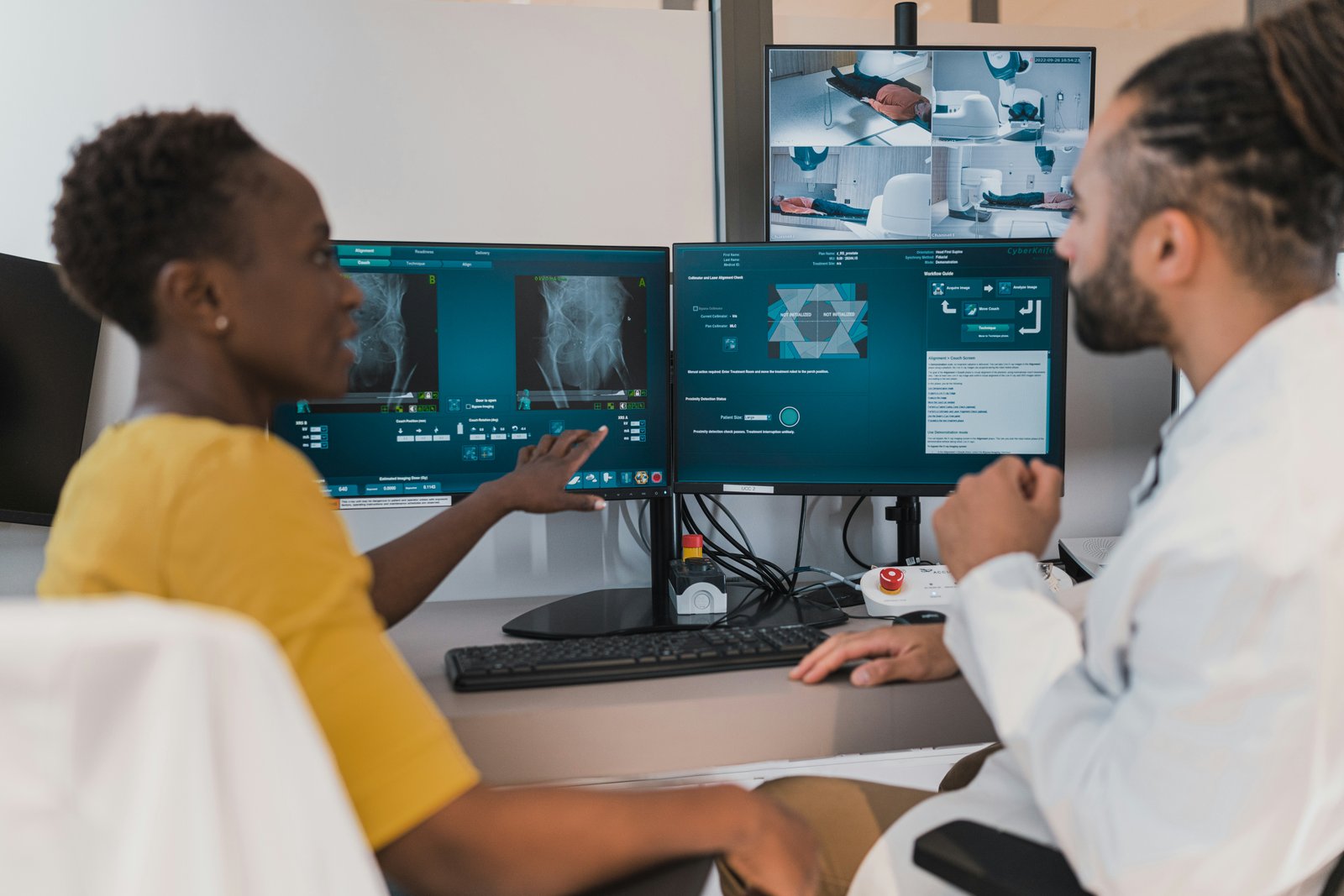
Healthcare organizations increasingly store and share diagnostic images through secure cloud platforms.
Cloud-based imaging supports:
- Faster image access
- Remote radiology services
- Multi-specialist collaboration
- Secure image archiving
- Improved diagnostic workflows
Digital imaging platforms improve efficiency while supporting coordinated clinical care. Cloud systems strengthen diagnostic services.
Research and Innovation Accelerate Through Shared Data
Cloud computing supports medical research by enabling secure access to large datasets.
Research applications include:
- Clinical studies
- Drug development
- Genomic research
- Population health analysis
- Medical innovation
Secure research environments improve collaboration while accelerating scientific discoveries. Shared knowledge supports healthcare advancement.
Scalability Improves Healthcare Flexibility
Cloud platforms enable healthcare organizations to expand digital capabilities according to operational needs.
Scalable systems support:
- Growing patient data volumes
- New healthcare applications
- Digital service expansion
- Remote workforce access
- Emerging technologies
Flexible infrastructure helps organizations adapt more efficiently to changing healthcare requirements. Scalable technology supports long-term growth.
Disaster Recovery Strengthens Healthcare Resilience
Healthcare organizations rely on cloud technologies to maintain service continuity during disruptions.
Cloud-based resilience includes:
- Automated backups
- Secure data recovery
- System redundancy
- Emergency access
- Business continuity planning
Reliable digital infrastructure helps healthcare providers maintain access to critical information during unexpected events. Resilient systems improve healthcare reliability.
Cybersecurity Remains a Strategic Priority
Protecting sensitive healthcare information remains essential as cloud adoption continues expanding.
Healthcare organizations strengthen security through:
- Data encryption
- Identity verification
- Access controls
- Continuous monitoring
- Regulatory compliance measures
Strong cybersecurity safeguards patient information while maintaining trust in digital healthcare services. Secure systems support responsible innovation.
Challenges Continu
Despite significant progress, healthcare organizations continue facing several implementation challenges.
These include:
- Integration with legacy systems
- Interoperability between healthcare platforms
- Workforce digital training
- Data governance requirements
- Managing cybersecurity risks
Continued investment in cloud infrastructure, artificial intelligence, cybersecurity, interoperability standards, workforce development, and digital health technologies will remain essential for maximizing the benefits of cloud computing.
Looking Forward
Cloud computing is transforming healthcare by combining secure data management, real-time collaboration, telehealth integration, advanced analytics, medical imaging, and scalable digital infrastructure into highly connected healthcare ecosystems. As healthcare systems continue embracing digital transformation, cloud technologies will play an increasingly important role in improving patient care, strengthening clinical collaboration, accelerating medical research, enhancing operational efficiency, and expanding healthcare access.
The continued advancement of cloud computing reflects a broader transformation across the healthcare industry, where intelligent technologies, secure digital platforms, data-driven decision-making, and connected healthcare systems are creating more efficient, collaborative, and future-ready healthcare delivery models.